


Songs That Inspired a New Nation: Music of the American Revolution
Music was an important part of the Revolutionary War. It inspired the colonists and kept the troops going despite the hardships and losses. The musicians of Dandelion Wine Deb Cavanaugh, Brenda Fisher and Terri Lukacko will perform the music and discuss some of the history behind it using a variety of musical instruments.
This program is jointly sponsored with Voorheesville Public Library.
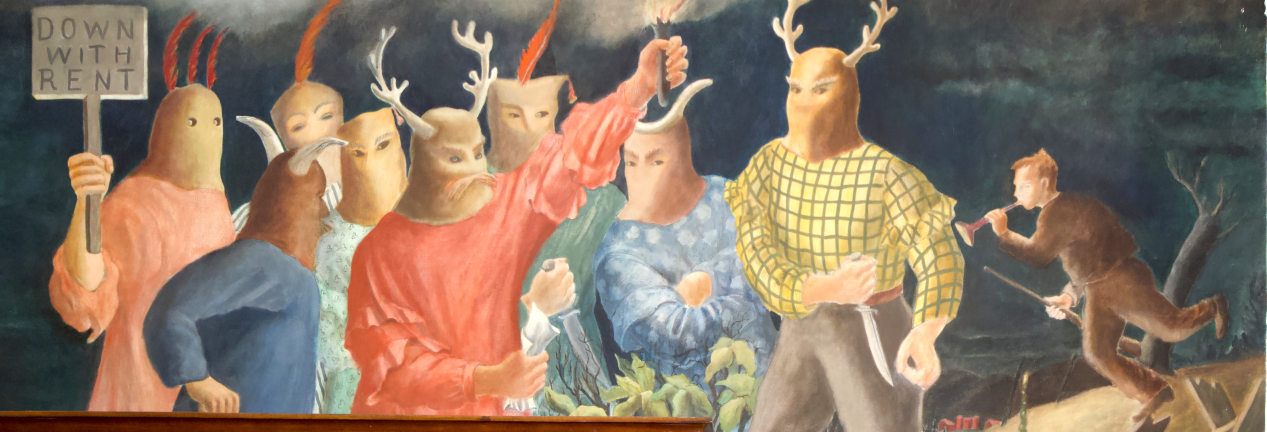
Song and Sounds of the Anti-Rent Movement
The Anti-Rent Movement was one of the last major challenges to feudal land ownership in the United States. In the 1840s, tenant farmers in the Hudson-Mohawk region organized protests against monopoly control of the land they worked, promoting their cause through newspapers, broadsides, rallies, poetry, and song. Professor Nancy Newman will explore how music and poetry helped tenant farmers express their protest, hopes, and vision for change.
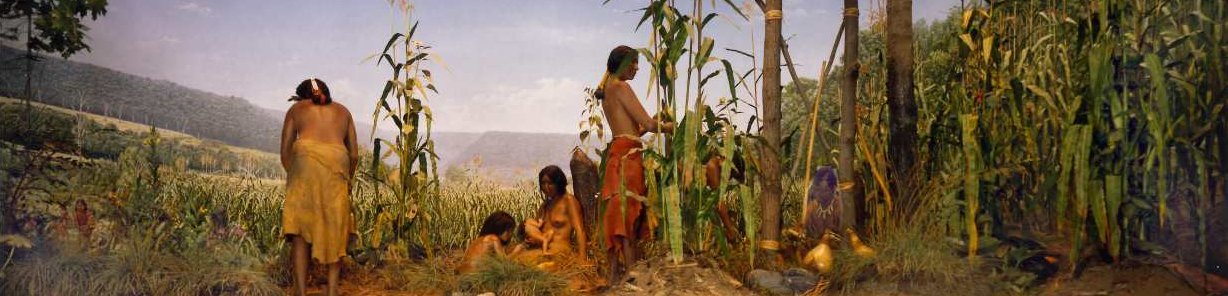
Recent Archaeological Research on First Peoples of the New York Region
Peoples arrived in what is now New York more than 13,000 years ago, near the end of the last Ice Age. Archaeologists find traces of their lives in ancient campsites, where small scatters of fluted spear points and other stone tools remain. Though these early Native Americans left only a limited material record, the evidence points to a remarkable story of skill, adaptation, and survival in a cold and changing landscape. Dr. John Lothrop, archaeologist with the New York State Museum, will share what recent research reveals about when people first came to the region, how they lived, and how small hunter-gatherer groups may have connected with one another across New York.
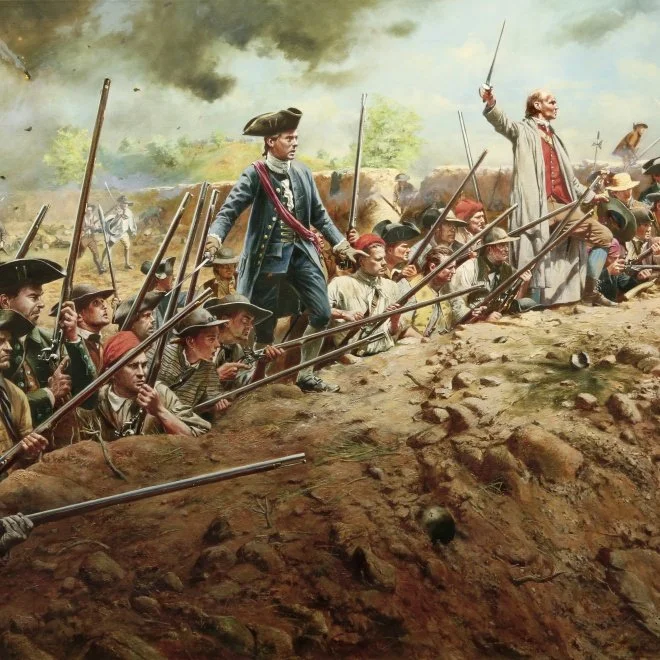
How to Find Patriots in Your Family Tree & Joining DAR/SAR
Curious whether a Revolutionary War patriot is part of your family story? Kristen Moore, Registrar of the General Peter Gansevoort Chapter, NSDAR, will show how Daughters of the American Revolution (DAR) and Sons of the American Revolution (SAR) resources can help you trace ancestors, identify patriots, and understand the documentation needed to join a lineage society. She will also explain how DAR and SAR define a “Patriot.”
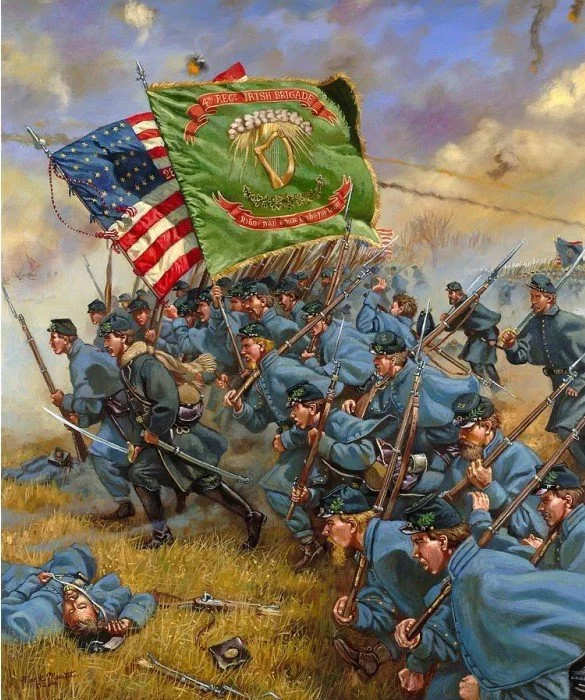
New York’s Foreign-Born Soldiers in the Civil War
New York provided an estimated 400,000 men to the Union cause, of whom over 25% were foreign born. The Civil War was the only American war to make significant use of foreign-born units and New York fielded more of them than any other state. Many immigrants gave their lives serving their new country. Michael Eikey, former Director of the NYS Military Museum and Veterans Research Center, will explore who these men were and why they fought for a country that was often hostile to them.
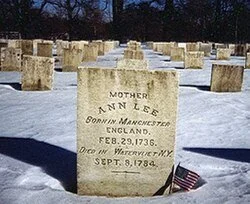
One Woman's Revolution
Teresa Frey Alexander, educator with the Shaker Heritage Society, will explore the remarkable story of Ann Lee and the early Shakers during the American Revolution. This program will look at the experiences, beliefs, and challenges that shaped the Shaker movement and help explain how one woman’s vision inspired a lasting religious community.
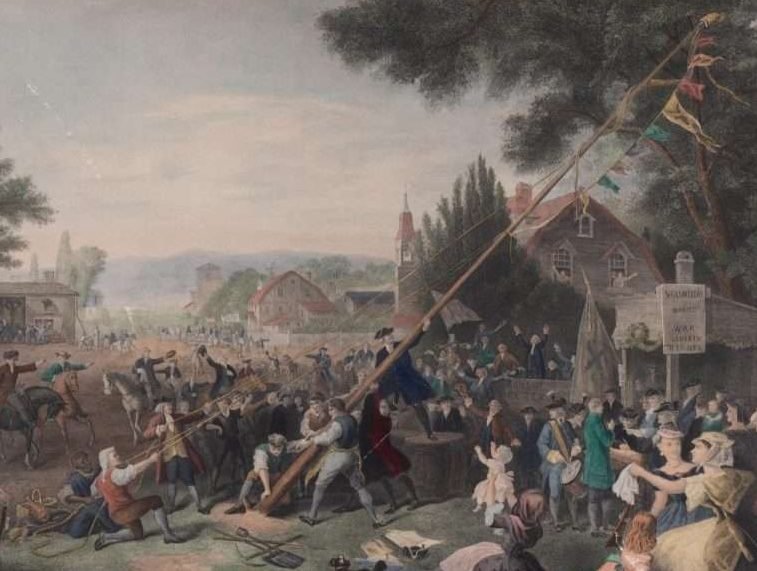
Revolutionary Schenectady: The Local Fight for Independence
The American Revolution created a new nation and changed world history, but its story was also shaped by local people and events. Michael Diana of the Schenectady Historical Society will bring Schenectady’s Revolutionary-era experience to life through individual stories, showing how the community entered and endured the conflict’s uncertainty and upheaval.
This program is jointly sponsored by NSHA and the Voorheesville Public Library (VPL) and will be held in the VPL’s Community Room at 51 School Road, Voorheesville, NY 12186
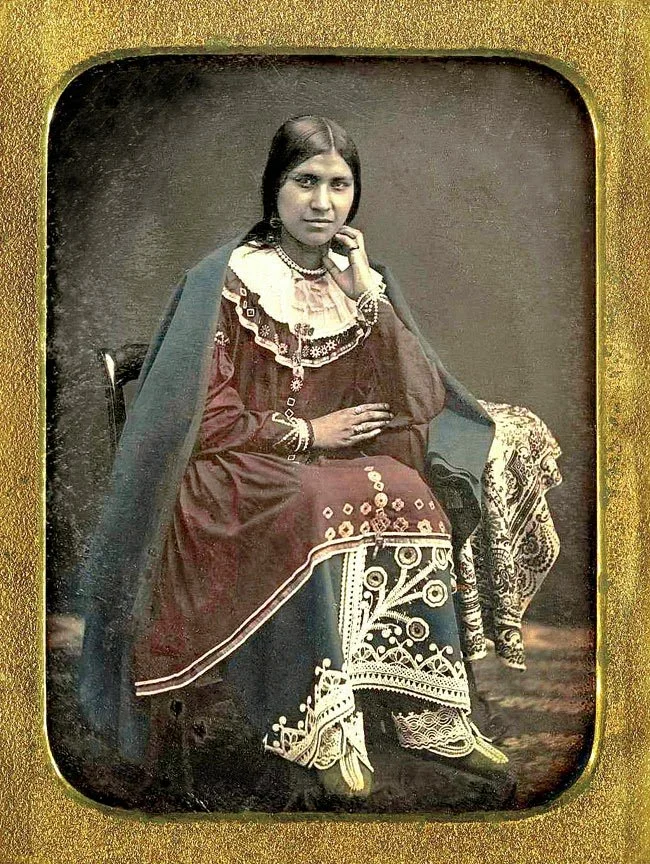
Shirts Powdered Red: Haudenosaunee Gender, Trade, and Exchange across Three Centuries
Dr. Maeve Kane, University of Albany will brings to life how Haudenosaunee(Iroquois) women used access to global trade to maintain a distinct and enduring Haudenosaunee identity in the face of colonial pressures to assimilate and disappear by looking at clothing that was bought, created, and remade.
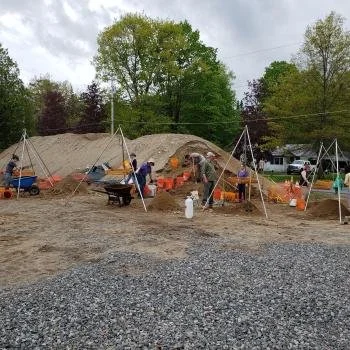
Hallowing This Ground: The Courtland Street Burials and Lake George Battlefield
Lisa Anderson, Bioarchaeologist, will provide a gripping look into the excavation and forensic study of the Courtland Street Burying Ground, a site now linked to the American Revolution and the harrowing Quebec Campaign of 1775–1776. Believed to be associated with the General Hospital at Fort George, the burial site held the remains of individuals who endured war and disease.

The World in Your Parlour: The Stereoscope, a Gilded Age “Virtual Reality” Experience
Historian Stuart Lehman will explore how the new 19th Century art of photography combined with the stereoscope, or “Stereopticon,” photographic view cards provided everyday people with 3D immersive experience that introduced people to scenes and changed how people viewed the world. Join us for a hands-on presentation as we explore this popular pastime and see how local photographers made places in the Albany area, including the new State Capitol and the Helderberg’s come alive.
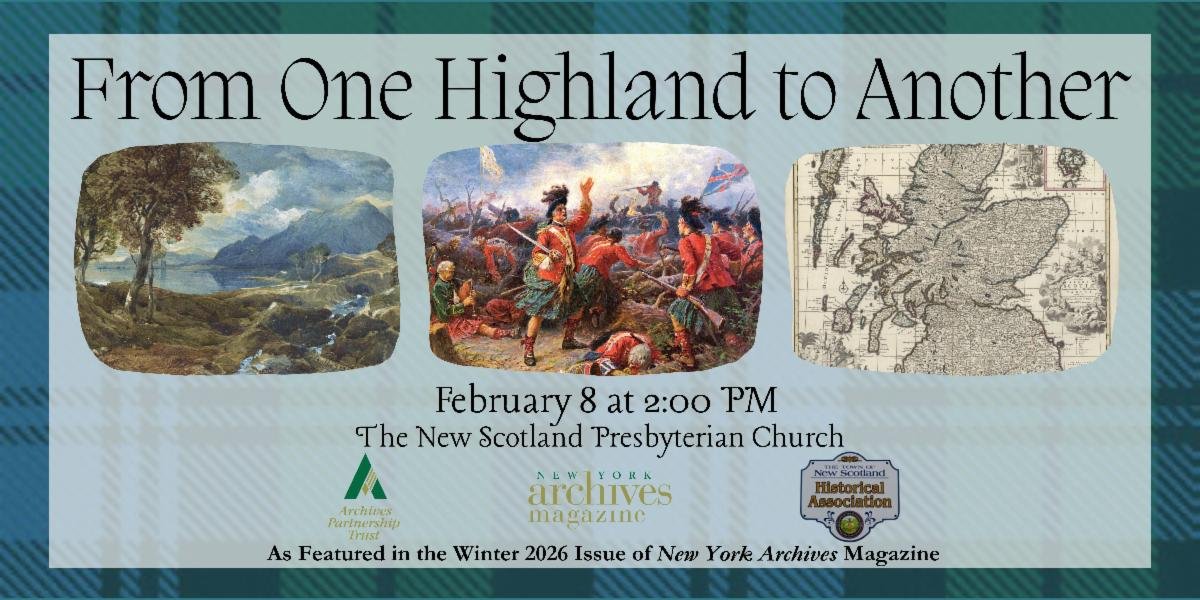
"From One Highland to Another": The Black Watch in New York State
Join New York Archives Magazine and the New Scotland Historical Association on February 8th at 2:00 PM for a riveting presentation: "From One Highland to Another."
Originally sent abroad to fight in the War of the Austrian Succession, The Black Watch later found solace in the Adirondacks. These highlands were not only reminiscent of the Watch’s homeland, but safeguarded their culture.
Author Francis Kneussle will lead a fascinating talk on The Black’s Watch’s role in some of the bloodiest battles taken place in New York and their contributions to Scottish immigration in the United States.
Preregistration Required: https://lp.constantcontactpages.com/ev/reg/3gctn2w/lp/a239fc56-e133-4a2d-937b-f61020afe938

Adamsville Ancients Fife and Drum Corps
Members of the Adamsville Ancients will present a musical program that includes a talk on the role of the fifes and drums in early America and performances of period tunes and more recent selections. This program is jointly sponsored with Voorheesville Public Library.

Winifred Goldring: The State Paleontologist Through an Archival Lens
The State Archives holds a treasure trove of Winifred Goldring’s correspondence, the first woman to hold the title of New York State Paleontologist. Jamie Brinkman, Archivist at the New York State Archives, will show what can be learned about Goldring as a person and scientist through correspondence kept over her 40-year career at the New York State Museum.
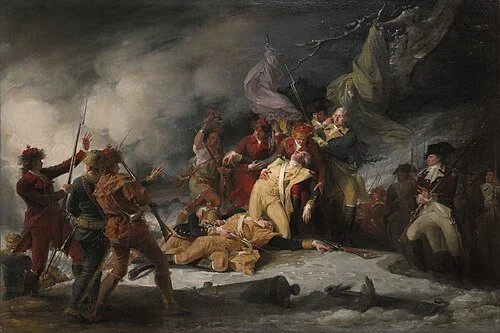
The American Invasion of Canada in 1775-1776 and Philip Schuyler’s Role
Dr. Kevin Bronner, government scholar and Albany historian, will discuss the heroic but tragic 1775-1776 American invasion of Canada during the American Revolution launch from Albany and the role of General Philip Schuyler in these events.
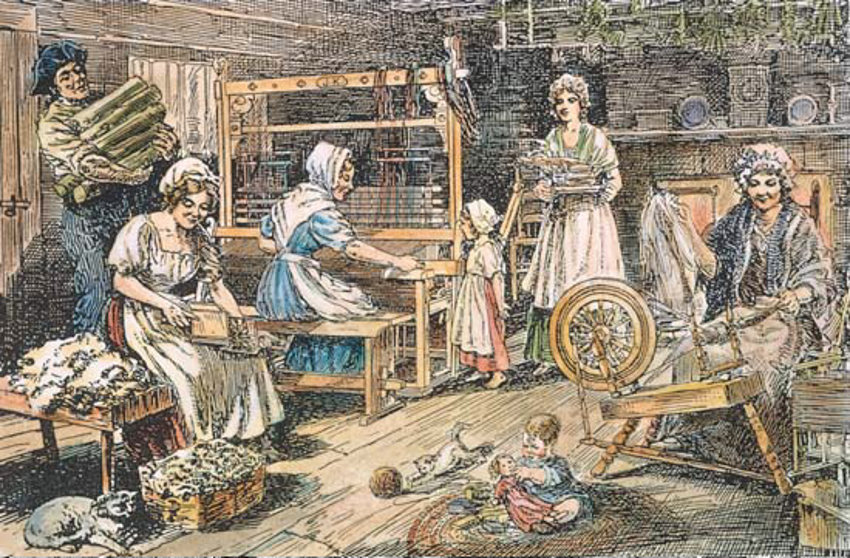
The Lives of Women in America
Shelby Mattice, Curator, Bronck Museum of the Greene County Historical Society, presents a candid and fascinating exploration of the physical and social realities of women's lives during various historical periods.
This program is jointly sponsored by NSHA and the Voorheesville Public Library (VPL) and will be held in the VPL’s Community Room at 51 School Road, Voorheesville, NY 12186

Place of the Lake: Five Centuries of Indigenous History in the Helderbergs
Centuries ago, local native families traveled, hunted, fished, and camped in a high elevation district they called Mbeesuk (Lake-Place), the area known today as the Helderberg Hilltowns. Historic documentation is scarce, but careful analysis of what is available can tell us much about a nearly vanished world. Join us for this presentation on a little-known topic and get a glimpse of the Hilltowns in the era before Euro-American settlement.

Early Dutch Vernacular Architecture in the Upper Hudson Valley
Walter R. Wheeler, Senior Architectural Historian at Hartgen Archeological Associates, will present a talk on the early European-American building traditions of our region and how they evolved in response to availability of natural resources, changing technologies and cultural influences. This survey is informed by 40 years of field work and the recent completion of the Thematic Study of Dutch Heritage Resources in the Greater Hudson Valley, which was compiled and edited by Mr. Wheeler and published in 2022.

Who Was Philip J. Schuyler?: A Look from Many Angles
Philip Schuyler had an illustrious military career and helped shape the newly independent United States. As a slave owner, this 18th century hero has become a controversial figure in the 21st century. For the last 20 years, the Schuyler Mansion has broadened the interpretation of who Philip was as well as the history of his wife and family, and the other enslaved and free people in the Schuyler household. Heidi Hill, Site Manager at Crailo and Schuyler Mansion State Historic Sites, will provide a 360-degree view of Schuyler, his family, and household.

The Motorcycle Industry in New York State
During the first few decades of the 20th century New York State was one of the leaders in motorcycle development and production. Long after the industry declined in New York, the 21st century has seen a revival in the form of custom choppers and e-motorcycles. Based on their extensive research Geoffrey Stein, Curator Emeritus and Brad Utter, Senior Historian and Curator at the New York State Museum will discuss the history of the motorcycle industry in New York State and highlight some of their favorite stories, including Voorheesville’s Terence “T” Musto owner of Fabbro Industries, who has multiple new patents for his inventions relating to bicycle and motorcycle frames.

“Crossroads of the Revolution”: Albany County’s USA 250 Celebration
This summer Albany County swore in a Commission to plan for the 250 Anniversary of the birth of the USA. The Commission will spend the next few years planning the local celebration. It has a lot to work with given the county’s rich Revolutionary War history and numerous historic sites including a number in New Scotland. A Commission member will discuss its early planning, how the 250th Anniversary celebration may be different than the 1976 Bicentennial, how citizens and local historical association can get involved, as well as other relevant topics.

Songs America Voted By (1840-1940)
The Lost Radio Rounders present a rousing musical program from the days before radio, television and social media, when political campaigns were advertised with “songsters,” booklets that contained new, politically-charged lyrics to popular songs of the day that promoted a candidate’s virtues and vilified the opposition. An acoustic trio, the Lost Radio Rounders share vocal duties with Tom Lindsay on guitar, bass and piano; Michael Eck on mandolin, guitar and ukulele, and Paul Jossman on banjo and guitar.

The Human History of the Albany Pine Bush
If the sandy paths of the Pine Bush could talk the stories they might tell! Erin Kinal, the Albany Pine Bush Preserve’s Education Director, will lead us on a journey back in time and explore the human history of the Albany Pine Bush from earliest times through to more recent history.
Extraordinary Art: Painting and Politics in Albany
Kathryn Kosta, Director of the Albany Historical Association, will relate how a single, seemingly ordinary painted scene in the Ten Broeck Mansion, of an old Albany Boarding House, can reveal so much about the politics and people of early nineteenth-century Albany.
Beyond the Pines: Colonial Schenectady
Michael Diana, Historian and Director of Education at the Schenectady Historic Society, will take us back to when the settlement of Schenectady was founded in 1661 as a tiny trade post where diverse cultures and languages met. He will relate the remarkable stories of the first generations of Schenectadians and the community they built.
Please note changed location
Finding a Place of Origin for Your Irish Ancestors
Anyone who has Irish ancestors is usually eager to find out just where in Ireland they came from. This can be a very difficult task for researchers, given the limited information typically given in historic documents about Irish ancestors, especially those of the famine era (1840's-1860's). Professional genealogist Lisa Dougherty will focus on sources to use here in the United States to help identify a place of origin for your Irish ancestor, and hopefully help further your research with Irish sources.
Archaeology and History of 19th Century African American Farms in the Capital Region
Michael Lucas, Archeologist with the State Museum, will discuss the little known but surprising and fascinating story of owner-operated African American farms in the Capital region in the 1800s as revealed in unique historical and archaeological sources.
An Introduction to Gravestone Conservation
Genealogist and Gravestone Conservator, Christopher White, will take us on a journey into old and neglected local cemeteries where time has taken its toll on 18th and 19th century gravestones. Gravestones can be the last and only vestige of a person's life and older neglected cemeteries may be some of our most vulnerable historic sites. Conservation of the artifacts can be extremely rewarding to all involved. Through a series of photographs White will present the process of gravestone conservation, maintenance, and restoration on both small and large gravestones.

Sacred Harp Singing School & Participatory Community Sing
Learn about and participate in America’s oldest hymn tradition hosted by the Albany Sacred Harp. Started in colonial New England and surviving in the rural South, Sacred Harp singing is known for its driving rhythms, full loud voices, and archaic melodies and harmonies. At this participatory workshop, you will learn to read and sing from shape note notation, an ingenious 200-year-old variation on traditional music notation that enables participants to sight sing in harmony even if they cannot read music.

The Battle of Bennington
The American defeat of British forces at Bennington in 1777 paved the way for victory in the Battles of Saratoga and ultimately in the Revolutionary War. However, few people realize that this crucial battle was fought in New York’s present day Capital Region. David Pitlyk, Historic Site interpreter, will relate the story of the Battle of Bennington, drawing from contemporary source material and archaeological findings and touch on how the battle has been commemorated and interpreted over time, both in New York and Vermont.
Event free and open to the public. The New Scotland Museum will be open 30 minutes before start of program.
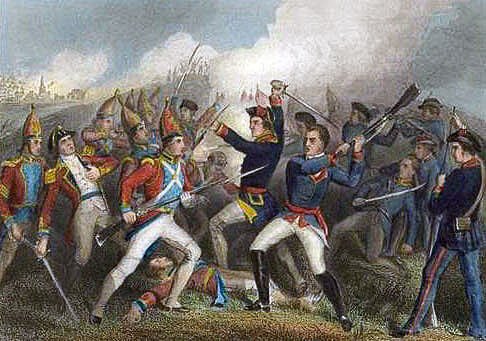

The Gilded Age Rises Again in Troy
Kathryn Sheehan, Rensselaer County & Troy City Historian, will present an illustrated lecture on how Troy’s 19th century architecture became an integral backdrop to the Julian Fellows HBO series, The Gilded Age.
Kathryn worked with the location scouts and production designer at sites throughout the city and provided information on how Troy appeared during the Gilded Age, and who the city’s major “old money” and “new money” families were.
Kathryn will also share some of the behind-the-scenes stories that happened during the filming for season one.

Enterprising Waters
The History and Art of New York’s Erie Canal
Brad Utter, Senior Historian and Curator at the New York State Museum and co-author of Enterprising Waters: The History and Art of New York’s Erie Canal, will discuss the artifacts, documents, images, and artworks that illustrate the history of the Erie Canal from its inception until today.
Focusing on the Capital Region, he will touch on themes of politics, engineering, commerce, and life on the canal illustrated by full color images of artifacts, documents, and images featured in the book and the exhibit on which it was based.

"Where a Kill is not a Kill and a Fly is not a Fly"
Dr. Charles Gehring, Dutch language scholar, Director of the New Netherland Research Center, and a proud New Scotland resident, will discuss the origin and meaning of Dutch family and place names prominent in the regions that were part of New Netherland.

A Civil War in the Mohawk Valley
The Battle of Oriskany
The Revolutionary War in the Mohawk Valley was largely a civil war between neighbors, siblings, and fathers and sons.
Historian Terry McMaster will discuss the Battle of Oriskany—one of the bloodiest battles of the Revolutionary War—along with the major players whose actions tore the Mohawk Valley apart, including the Herkimers, Johnsons, Brants, Butlers, the Palatine German, Dutch and Scots-Irish settlers, as well as the Mohawk, Oneida, Seneca and other Native participants.
Click HERE for more on the Battle of Oriskany.

NSHA Dedication of Two Historical Markers
The New Scotland Historical Association will soon dedicate two new historical markers. Please join us for the ceremony!
The first will be on the site of the home and laboratory of Robert E. Horton at 10 a.m. on Krumkill Road (between Hilton Road and Normanskill Road)
The dedication for the Cooper Farm will begin at 10:45 a.m. and is on Picard Road at Heldeberg workshop (353 Picard Road in Voorheesville).